
Osceola County Death Index
Osceola County death index records are kept at the county clerk's office in Reed City, with death records available from 1869 to the present. You can search free state-level databases for older entries and request certified copies directly from the clerk. This page covers how to find Osceola County death records, what each source contains, and what to expect when you make a request.
Osceola County Overview
Osceola County Clerk Death Records
The Osceola County Clerk in Reed City handles death records for the county. The office is at 301 W. Upton Avenue, Reed City, MI 49677. Death records go back to 1869, which is when the county was organized. The clerk issues certified copies of death certificates and maintains the local death index. For most requests, you will deal with this office directly.
Osceola County is a smaller, rural county in central Michigan. The clerk's office is the main point of contact for anyone who needs a certified death certificate for legal, estate, or insurance purposes. You can reach the office by phone at (231) 832-3261. The first certified copy costs $15. Each additional copy of the same record is $5. Payment is accepted in person by cash or check. Mail requests require a check or money order made out to the Osceola County Clerk.
Under MCL 333.2885, Michigan death records are public records. You do not need to prove a relationship to the deceased to get a copy. Anyone can submit a request as long as they provide the required identifying information about the record they want.
| Address | 301 W. Upton Avenue, Reed City, MI 49677 |
|---|---|
| Phone | (231) 832-3261 |
| Records Available | 1869 to present |
| Fee | $15 first copy, $5 each additional copy |
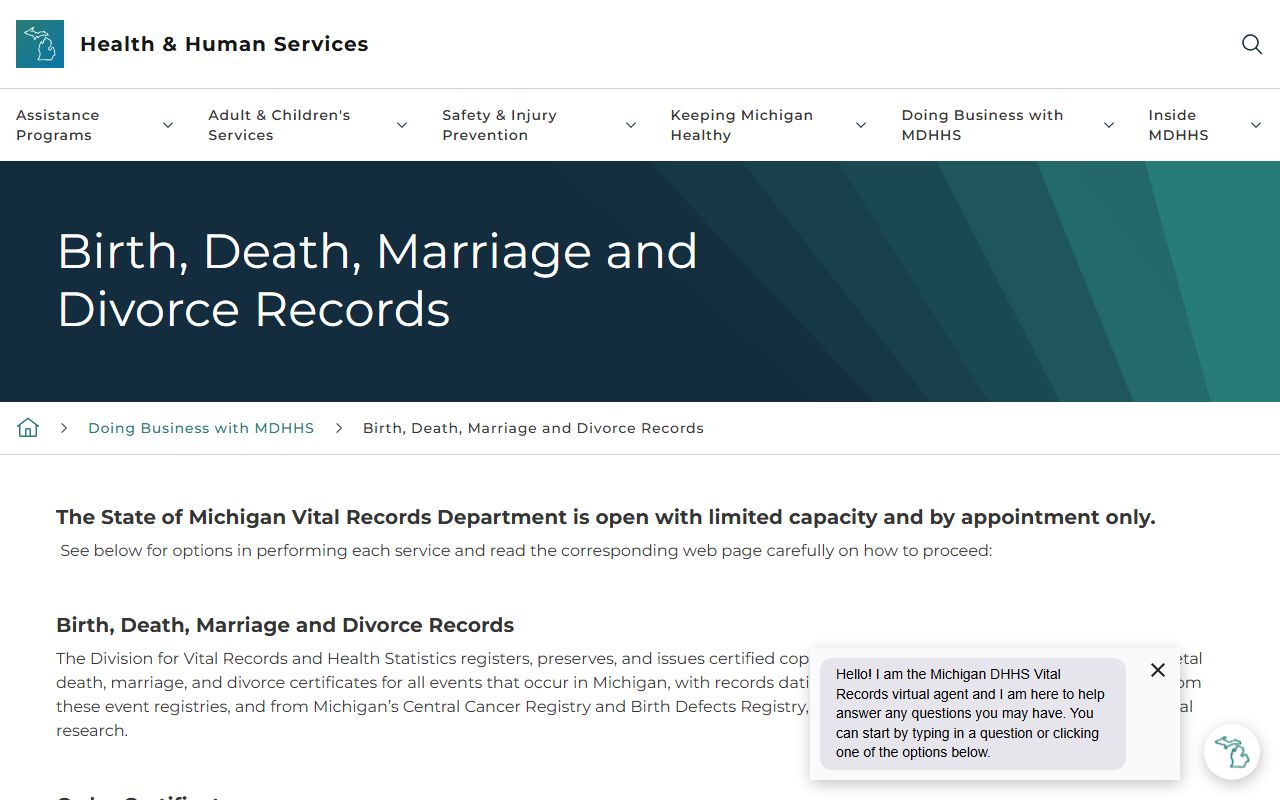
The Michigan MDHHS vital records page describes state-level ordering options that complement what the Osceola County Clerk provides locally.
How to Search Osceola County Death Records
There are three ways to get Osceola County death records: in person, by mail, or through free online databases for older entries. For a certified copy, in person is the fastest route. You'll need to know the name of the deceased and the approximate year of death. Bring a valid photo ID and cash or a check for the fee. The clerk can pull the record and issue a certified copy the same day.
For genealogy work, start with the free state databases before contacting the clerk. The GENDIS database covers Michigan death records from 1867 to 1897 and includes Osceola County entries from that period. It is free and searchable by name. For deaths between 1897 and 1952, Michiganology.org has a statewide death index that covers Osceola County. Both of these are good starting points before you commit to ordering a certified copy.
Mail requests work well for people who cannot visit Reed City in person. Send a written request with the deceased person's full name, date of death, and your contact details. Include a check or money order for the fee and a copy of your photo ID. The clerk will mail the certified copy back to you. Processing times can vary, so allow extra time if you have a deadline.
Note: The free online databases do not provide certified copies. You still need to contact the clerk for a document valid for legal use.
Free Death Index Databases for Osceola County
Several free resources cover Osceola County deaths going back to the 1800s. GENDIS and Michiganology are the two most useful for local research. GENDIS covers the earliest registered deaths in the county from 1867 to 1897. Michiganology picks up from 1897 through 1952. Together they give you solid coverage for research going back over 150 years.
The Michigan MDHHS vital records office in Lansing also holds state copies of Osceola County death records from 1867 onward. If you prefer to order from the state rather than the county, MDHHS is an option. Their fee schedule differs from the county's. Check the MDHHS site for current pricing and forms before submitting a request.
For older records outside the GENDIS range, FamilySearch.org has free indexed Michigan death records that include Osceola County. Church records and cemetery listings in the Reed City area can also fill gaps for deaths in the mid-to-late 1800s. The Michigan State Archives in Lansing holds original death registers and may have records not found in the online indexes.
What Osceola County Death Records Include
A certified death certificate from Osceola County includes the full name of the person who died, the date and place of death, age at death, and cause of death. It also lists the attending physician or medical examiner, the informant's name, and the place of burial. These details are used for probate filings, insurance claims, Social Security matters, and genealogy research.
Older records from the 1800s may be less complete. Early death registration in Michigan was inconsistent, and rural counties like Osceola had varying compliance with state registration requirements in the years after 1867. If a record seems incomplete, checking church registers or probate court files for the same time period can help fill in missing information. Under MCL 333.2843, Michigan law requires death registration, which is why the county's index is largely intact from its 1869 start.
Nearby Counties
These counties border Osceola County. If you are not sure which county holds a specific death record, check records in neighboring areas.